

Medications/Drugs
Pain killers - Used for minor pain reduction and slightly increases a patients blood pressure. The use ratio is 1-2, meaning minor pain can be eliminated with 2 pills. The time spacing with each pill given to the patient is 20 seconds. To deal with normal pain a patient will need 4 pills.
Morphine - Used for normal pain and severe pain. Time spacing between each injection given to the patient is 5 minutes.
Epinephrine - Used when a patient can hear their own heart beat. Can also be used to counter Morphine. Time spacing between each injection given to the patient is 5 minutes.
Naloxone - Used to clear opioid overdoses caused by medications such as Morphine. The effect ration is 1-1, so 1 Naloxone reverses 1 Morphine. Reversing morphine also means the pain will be reverted.
TXA - TXA is a clotting agent. Prevents clots from being broken down by the body. Can only be pushed through by IV or IO.
EACA - Fully stitches any previously bandaged wounds.
Ammonium Carbonate - Used to restore consciousness under very specific conditions. The patient's blood pressure must be between 110 and 130 Systolic in order for Ammonium Carbonate to work.
Surgical Drugs
Lidocaine - Used to reduce pain from closed reductions.
Etomidate - Used to reduce pain from open reductions.
Lorazepam - Used to sedate patients before surgery. (Puts the Patient to sleep)
Flumazenil - Used to remove sedation. (Wake the patient up again)
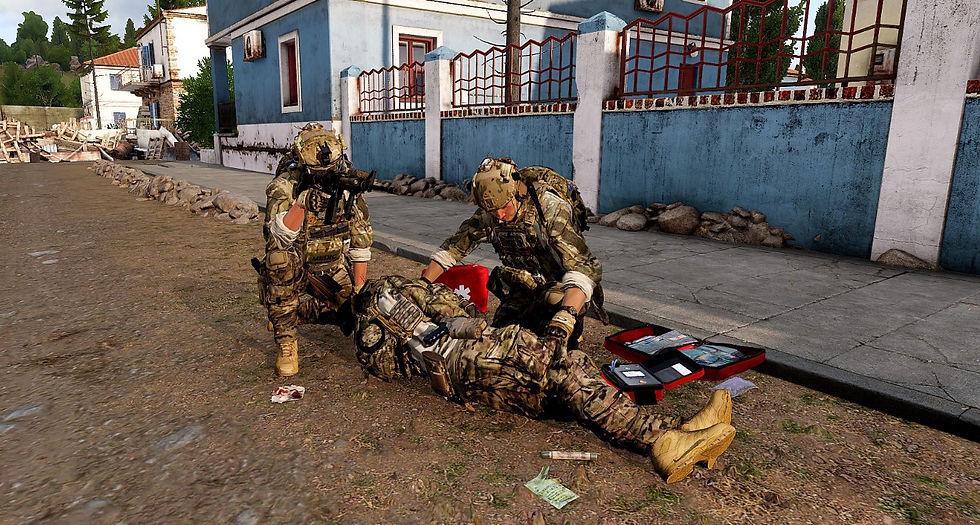
TRIAGE CATEGORIES
Triage Categories indicate the state of the patient and the level of action the Medic is required to take. If multiple units are wounded the Medic should treat those that are more severe in the situation.
Medics are required to carry a Notepad and put in the name of the unit they treated and the Triage category next to it.
E.g Mike - Delayed
Medics can then send the logs at the end of the operation to the owner of the Unit or they can decide to discard it. This is just to have proof to give a unit a Purple Heart if they sustain a Expectant Category.
A Triage Category card will be given below.

Tourniquets should be removed 5 min after it was applied.
BANDAGES
Bandages are a vital part of a Medics arsenal, and it is important to know how effective each type of bandage is at dealing with wounds.
Here is a table that covers the effectiveness of each bandage.
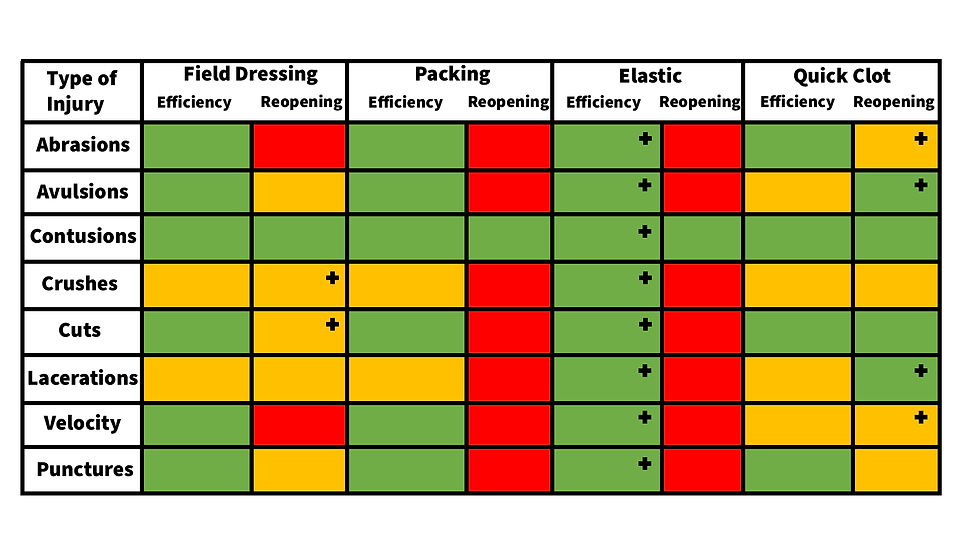
To prevent a wound from reopening you will have to stitch them up!
Once a wound has been fully bandaged it will have to be stitched. To do this you will have to go to the team medic who will have a surgical kit and a number of sutures (ace medical items). The medic will use the stitch kit and the sutures to stitch up the wounds so they don't reopen.
Heart Rate & Blood Pressure
Here are statistics on Heart Rates and Blood Pressure. If they get too high you need to act to lower it and if they get too low, you need to act to raise it.
Heart Rate
120+ - High
46 - 119 - Normal
45- Low
Blood Pressure
160/160+ bps - High
100/160 bps - Normal
20/100 bps - Low
0/20 bps - Dead